

Can I combine different laser skin resurfacing treatments?
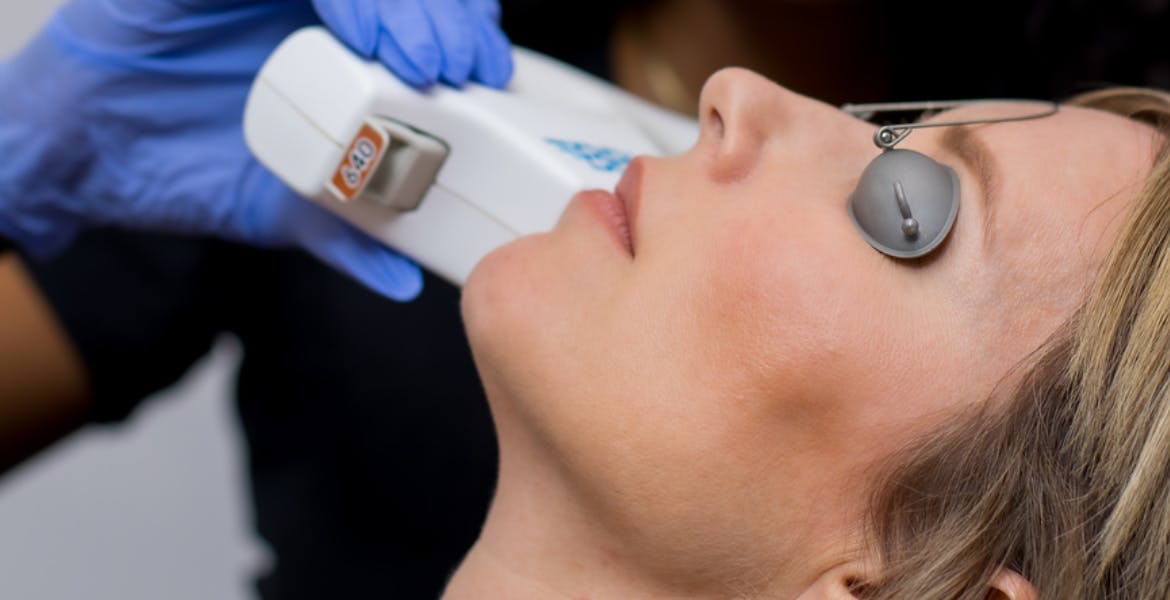
Patients don’t typically seek to combine different laser resurfacing treatments, as the laser and BroadBand Light energy address the same areas of the facial skin. However, our laser skin resurfacing treatments can be combined with other treatments and even surgical procedures, such as liposuction. If you’re interested in combining another treatment with a laser skin resurfacing treatment, that’s something you and your provider can discuss during your consultation.
How do I prepare for laser skin resurfacing treatment?
Before your laser skin resurfacing treatment, you should do the following:
- Avoid tanning or heavy sun exposure for one month before your session.
- Don’t have any medium chemical peels or dermabrasion for one month before your session.
- Don’t use medications that cause photosensitivity, such as doxycycline or minocycline, for at least 72 hours before your session.
- If you have a history of herpes or shingles in the treatment area, be sure to let us know beforehand.
What is the recovery like after laser skin resurfacing?
After your laser skin resurfacing treatment, you may experience mild soreness and swelling, but these symptoms should subside fairly quickly on their own. Additionally, your skin will have lost some of its natural sun protection, which means that you’ll need to wear sunscreen with an SPF of at least 30 for several months. For the first few days after the treatment, though, you should try to avoid direct sun exposure entirely. That said, most patients can return to work and get back to their normal routines within a day or two of their treatment session.